
Picture credit
Whenever I get my passport photo retaken back home in South Korea, the photographer always tells me, “Look serious but with a slight smile. Don’t squint, keep your eyes large.” Looking too serious or too smiley, it always takes me a few tries to smile the way he, who offers free retakes if the passport photo is denied by the government, finds to be adequate. Even then, he sometimes has to touch up my photo to make it so that there are no wrinkle lines around my eyes or lips.

Picture credit
This kind-of-smiling-but-not smile is foreign to me, because I have always smiled the way I find comfortable and natural. I don’t usually give much thought to how widely I smile and squinty my eyes get in the United States, where I live most of the year. It is only when I go back to Korea that I sometimes receive remarks about it. According to evolutionary psychologists, smiling has evolved so that it is accepted and expected differently based on culture and the social context in which it occurs.
Where do smiles originate?
Smiling is thought to have originated from primates wanting to display a submissive pose to show that they had no intention of attacking. They relaxed their lips and bared their teeth, which were still kept together to show that they were non-threatening. Many animals, like dogs, still do this. Our smiles represent the same thing: we display smiles to showcase our friendliness and openness, whether it be genuine or not.

Picture credit
How does smiling differ based on social contexts?
Because smiling is associated with friendliness and openness, it is used as a tool to leave a positive impression on someone. This is why we usually smile when we introduce ourselves to new people. While smiles are universally used for this purpose, it also has other functions that are based on social context too, such as improving our status.
It was found that those of us who feel socially excluded are more aware of the differences between real and fake smiles. Being able to distinguish this allows us to focus more on interacting and developing relationships with people who present genuine smiles. This prevents us from wasting more time, energy, and resources on those who don’t seem sincere, friendly, and have our best interest in mind. Put in another way, smiling gives us the ability to determine who would allow us to surround ourselves with people who support or can benefit us in some way in society.

Picture credit
For example, it was found that we either show or conceal smiles more depending on the status, rank, and power of the person with whom we are interacting. While this “boss effect” is partially based on culture (which will be discussed in the next section), it is more heavily influenced by who can advance our own status in our given society. We tend to acknowledge and respond to our bosses that have the highest social influence and are the most relevant to our career.
How does smiling differ based upon culture?
To make things more complicated, social contexts are influenced by the culture of the society. Each country has a different, or slightly altered, culture that affects how we perceive actions and behaviors, including smiling. For example, the “boss effect” study found that Chinese workers are more inclined to smile towards their direct supervisors, because they have the direct power to advance or negatively impact their career. On the other hand, American workers have a faster reaction time in smiling towards their supervisor who they perceive to have higher social influence in general.
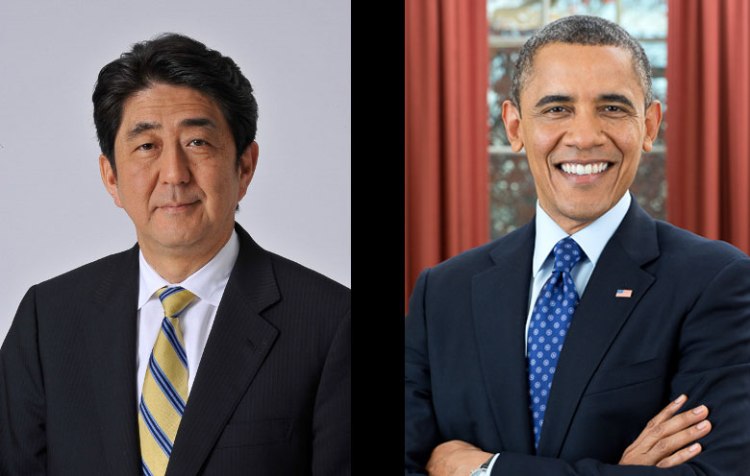
In the United States, smiles are readily shown in public because they signal positive social relationships. However, smiles don’t necessarily convey the same meaning in other cultures. A study found that Chinese people are less likely to smile as often or as long as Americans do, because long-term smiling, which is common in the United States, is associated with being embarrassed and uncomfortable in Chinese culture. So, in China, people are less like to smile as long as Americans do.
There are also different cultural expectations that impact this difference in smiling frequency in the two countries. In the United States and other Western cultures, people are encouraged to express their feelings and emotions. In Asian cultures, including China’s, people are more reserved and keep their emotions to themselves. They tend to not express emotional fluctuations openly compared to their Western counterparts. This also might explain why Americans smile more often than Chinese people.
Picture credit
Perhaps it is because I have lived many years in the United States, where I have been exposed to full and open smiles constantly, that I always struggle creating the perfect, acceptable smiles required for my passport. While this type of smiling is something that I will need to work on improving for when I return home, I think that my smiles currently are helpful in meeting and making new friends and connections while at college right now.
 Explaining Human Behavior